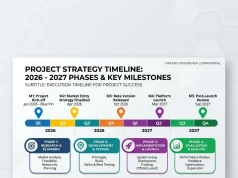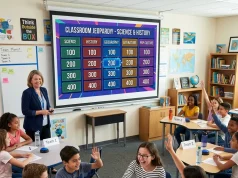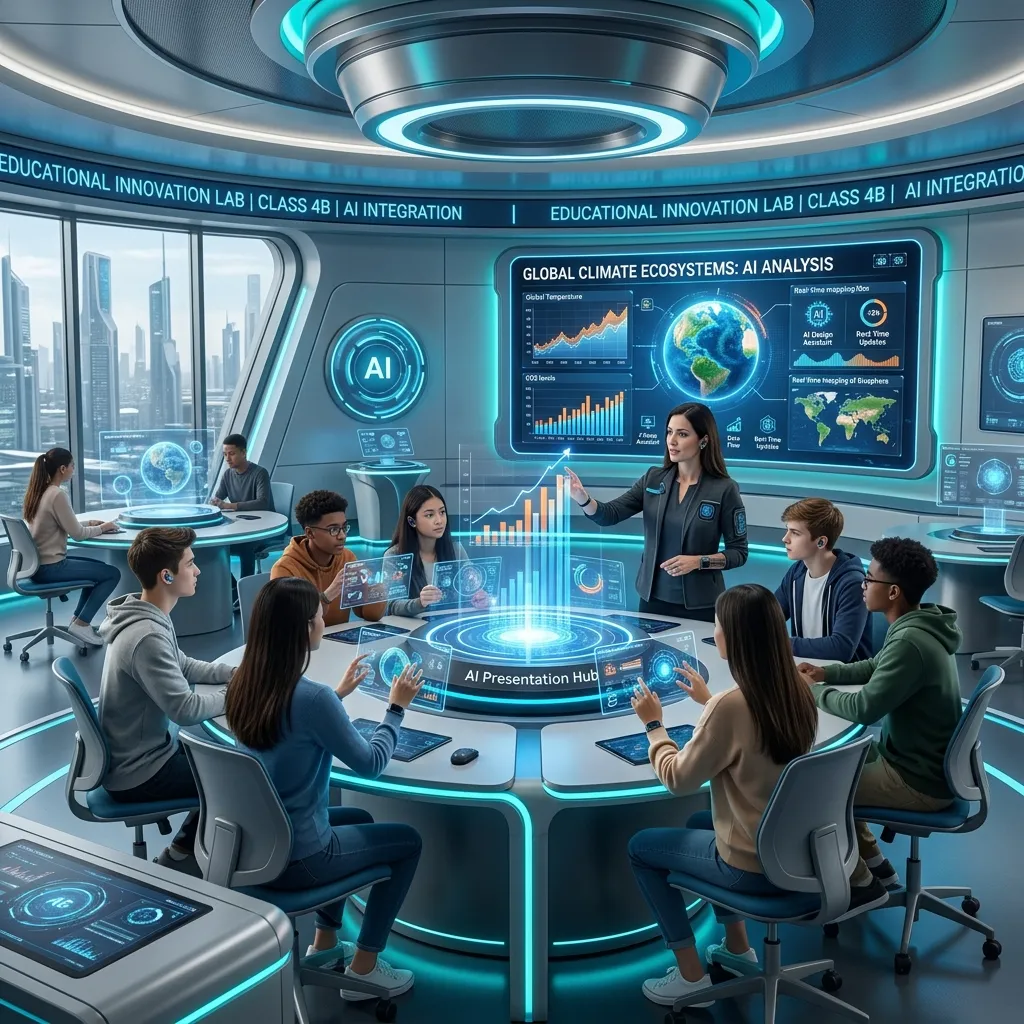
The Future of AI in Presentation Design and Education reshapes how we communicate complex ideas. Smart algorithms now empower creators to deliver highly engaging, personalized learning experiences seamlessly.
The Future of AI in Presentation Design and Education bridges the gap between raw data and audience comprehension. This guide covers how automated slide generation, immersive learning environments, and adaptive algorithms enhance knowledge retention, streamline workflows, and revolutionize both corporate communication and academic instruction.
Transforming the Classroom and Boardroom
The Future of AI in Presentation Design and Education represents a profound shift in how knowledge is constructed, shared, and absorbed. Artificial intelligence accelerates the transition from static, linear slide decks to dynamic, highly interactive ecosystems. As educators and professionals face increasing demands for rapid content creation and personalized delivery, artificial intelligence steps in as a vital collaborator. By understanding the Future of AI in Presentation Design and Education, institutions and corporations can leverage machine learning to optimize cognitive load, ensuring that audiences not only see information but also deeply understand it.
The Evolution of Visual Storytelling

For decades, creating a compelling slide deck required hours of manual formatting, alignment, and graphic selection. The Future of AI in Presentation Design and Education eliminates these bottlenecks. Modern algorithms use natural language processing to analyze an outline or raw text and automatically generate visually balanced, brand-compliant slides. This automation allows speakers to focus heavily on narrative delivery rather than pixel-perfect formatting. In educational settings, this means teachers can rapidly deploy customized visual aids that adapt to different learning modalities, reinforcing the immense value embedded in the Future of AI in Presentation Design and Education.
Adaptive Learning and Personalized Feedback
A critical component driving the Future of AI in Presentation Design and Education is adaptive learning. AI systems can now monitor how students or audience members interact with digital content in real time. If a student struggles with a specific concept within a presentation module, the AI can seamlessly adjust the subsequent slides, offering supplementary explanations or simplifying complex data visualizations. This highly personalized feedback loop mirrors the capabilities of a dedicated tutor. Integrating adaptive learning modules into daily curricula guarantees that the Future of AI in Presentation Design and Education will foster more inclusive and effective learning environments.
Key Technological Drivers
To fully grasp the Future of AI in Presentation Design and Education, we must examine the underlying technologies powering this transformation. From natural language processors to augmented reality integrations, these tools are redefining the boundaries of instructional design.
Natural Language Processing and Content Generation
Natural Language Processing (NLP) is central to the Future of AI in Presentation Design and Education. NLP allows software to comprehend context, summarize lengthy articles, and extract key bullet points automatically. When a presenter inputs a dense research paper, the AI synthesizes the core arguments, suggesting an optimal slide structure. This capability is revolutionary for academic researchers and corporate strategists alike. Furthermore, NLP facilitates real-time translation and closed captioning, making the Future of AI in Presentation Design and Education a beacon for global accessibility. You can see early iterations of this in tools highlighted by Stanford Accelerator for Learning, where AI acts as a collaborative partner in expanding educational reach.
Immersive Experiences: AR and VR Integration

The Future of AI in Presentation Design and Education extends far beyond a two-dimensional screen. Augmented Reality (AR) and Virtual Reality (VR) are merging with AI to create immersive instructional environments. Imagine a presentation on human anatomy where the AI generates a rotating 3D model in the center of the room, adjusting its complexity based on the audience’s real-time questions. The synergy between AI and spatial computing ensures that the Future of AI in Presentation Design and Education will support experiential learning. Immersive educational ecosystems drastically improve retention rates because they transform passive listeners into active participants.
Automated Data Visualization
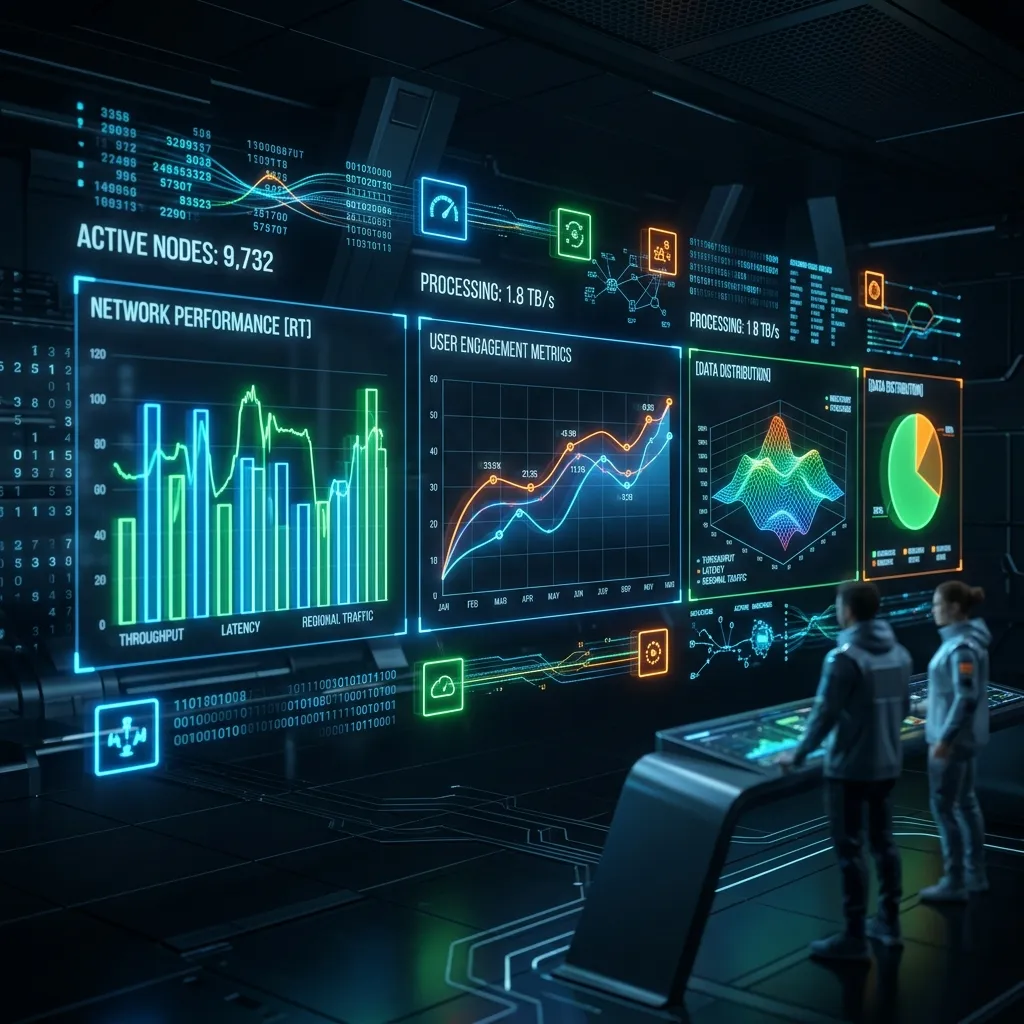
Translating complex datasets into understandable charts is a notoriously difficult aspect of presentation design. The Future of AI in Presentation Design and Education solves this by automating data visualization. AI tools can analyze spreadsheets, identify the most compelling trends, and instantly generate interactive graphs that update in real time. This ensures that business leaders and academic researchers always present the most current data without manual recalibration. The Future of AI in Presentation Design and Education turns static numbers into dynamic narratives, enabling data-driven decision-making across all sectors.
Comparison: Traditional vs. AI-Powered Workflows
Understanding the Future of AI in Presentation Design and Education requires a clear comparison of workflows. Here is how AI is changing the landscape:
|
Feature |
Traditional Presentation Design |
AI-Powered Presentation Design |
|---|---|---|
|
Content Creation |
Manual drafting, summarizing, and editing |
Automated synthesis via NLP, instant outlining |
|
Visual Formatting |
Manual alignment, font selection, color matching |
Instant application of brand guidelines, auto-layout |
|
Data Visualization |
Manual chart creation, static data representation |
Dynamic charts, automatic trend identification |
|
Accessibility |
Manual captioning, limited language options |
Real-time translation, automated closed captioning |
|
Audience Adaptation |
One-size-fits-all, static delivery |
Real-time pacing adjustments, dynamic content shifting |
As demonstrated, the Future of AI in Presentation Design and Education shifts the burden of mechanical tasks to the machine, elevating the human role to one of strategic oversight and empathetic communication.
Enhancing Instructional Design
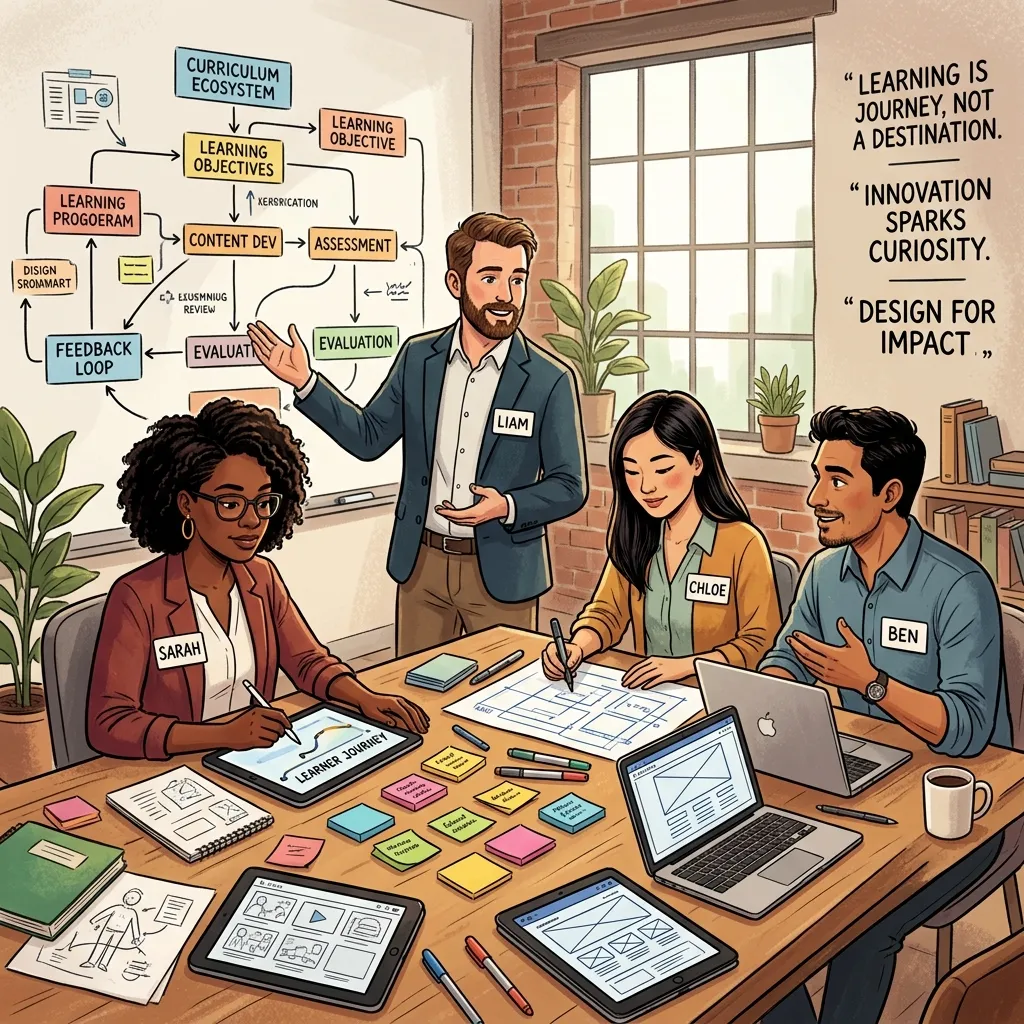
The Future of AI in Presentation Design and Education is fundamentally altering instructional design methodologies. Educational technologists are no longer just building courses; they are designing intelligent systems that evolve.
Reducing Cognitive Overload
One of the primary goals of the Future of AI in Presentation Design and Education is reducing cognitive overload. By analyzing the complexity of text and the density of visuals, AI tools can warn presenters when a slide is too cluttered. The system might suggest splitting the information across three slides or converting a dense paragraph into a simple infographic. This intelligent pacing is vital in educational settings, where student focus must be carefully managed. The Future of AI in Presentation Design and Education ensures that materials are delivered in digestible, brain-friendly increments.
Real-World Case Studies and Simulations
The Future of AI in Presentation Design and Education allows for the rapid deployment of scenario-based learning. AI can generate varied, realistic case studies tailored to specific industries or academic disciplines. For example, medical students can interact with AI-generated patient profiles presented through dynamic slides that change based on the students’ diagnostic choices. According to research published by IEEE Xplore, this kind of interactive presentation software significantly boosts analytical thinking and practical application skills, proving that the Future of AI in Presentation Design and Education is essential for complex skill acquisition.
Common Mistakes to Avoid
While the Future of AI in Presentation Design and Education offers incredible benefits, users must navigate potential pitfalls to maximize effectiveness.
- Over-Reliance on Automation: Do not let the AI dictate your entire narrative. The human element—emotion, passion, and personal anecdotes—remains irreplaceable. The Future of AI in Presentation Design and Education should augment human connection, not replace it.
- Ignoring Data Privacy: When feeding proprietary business data or student information into AI presentation tools, be mindful of security. The Future of AI in Presentation Design and Education must be built on secure, compliant platforms.
- Neglecting Visual Harmony: Even though AI can generate images, they may not always align perfectly with your brand tone. Always review AI-generated art for consistency and appropriateness.
- Failing to Rehearse: An AI-generated deck still requires a prepared speaker. The Future of AI in Presentation Design and Education speeds up creation, but delivery still demands human practice and timing.
Expert Insights and Pro Tips
To harness the true power of the Future of AI in Presentation Design and Education, consider these expert strategies:
- Use AI as a Brainstorming Partner: Before generating slides, use AI chatbots to challenge your presentation thesis and suggest counterarguments you might have missed.
- Leverage Micro-Learning: Use AI to break down a one-hour lecture into five-minute micro-presentations. The Future of AI in Presentation Design and Education heavily favors modular, bite-sized learning.
- Optimize for Voice Search: As you design educational content, remember that students often use voice queries. Ensure your AI-generated text includes natural, conversational phrasing.
- Focus on Digital Equity: Ensure the AI tools you use offer robust accessibility features, such as screen reader compatibility and high-contrast modes. The Future of AI in Presentation Design and Education must serve all learners equally, a point strongly emphasized by design firms like IDEO.
The Role of Educators and Presenters
As the Future of AI in Presentation Design and Education unfolds, the role of the presenter evolves from content creator to experience facilitator. Machines will handle the heavy lifting of data synthesis and slide layout, but the presenter must contextualize the information, build trust, and inspire action.
Building Emotional Connections
AI cannot read the subtle emotional cues of a live room the way a human can. The Future of AI in Presentation Design and Education frees up cognitive space for the speaker to make eye contact, read body language, and pivot the discussion based on the audience’s mood. By spending less time worrying about which slide comes next, educators and business leaders can focus entirely on engagement.
Ethical Considerations and AI Literacy
A crucial component of the Future of AI in Presentation Design and Education is teaching AI literacy. Students and professionals must understand how these algorithms work, recognizing potential biases in AI-generated content. When AI recommends a specific narrative structure or generates an image, the user must critically evaluate its accuracy and fairness. Institutions must prioritize ethics as they integrate the Future of AI in Presentation Design and Education into their core operations. Educause frequently highlights the necessity of human oversight in automated learning environments.
Looking Ahead: 2026 and Beyond
The Future of AI in Presentation Design and Education is not a distant concept; it is actively rewriting the rules of engagement today. By 2026, we will see seamless integration between presentation software and biometric feedback, where a smart classroom might automatically adjust the presentation pace if sensors detect waning student attention.
Furthermore, the Future of AI in Presentation Design and Education will democratize high-quality instructional design. Small businesses and underfunded schools will have access to enterprise-grade presentation capabilities, leveling the playing field. The Future of AI in Presentation Design and Education will enable anyone with an idea to communicate it with professional polish and profound impact. We are moving toward a highly collaborative ecosystem where human ingenuity and machine efficiency merge to create the ultimate learning and communication tools.
To fully capitalize on the Future of AI in Presentation Design and Education, organizations must remain agile, continuously testing new tools while maintaining a strict focus on human-centered design principles. The organizations that thrive will be those that view AI not as a shortcut, but as a catalyst for deeper, more meaningful communication. The Future of AI in Presentation Design and Education promises a world where ideas face zero friction between conception and comprehension.
Conclusion
Embrace the Future of AI in Presentation Design and Education today to revolutionize your communication strategy. By leveraging intelligent automation, you can save hours of preparation time while delivering deeply personalized, impactful narratives. Start exploring AI-powered design platforms now to elevate your next lecture or boardroom pitch to unprecedented heights.
FAQs
What is the Future of AI in Presentation Design and Education?
The Future of AI in Presentation Design and Education refers to the integration of machine learning algorithms to automate slide creation, enhance visual storytelling, and personalize educational content for improved audience engagement.
How does AI save time in presentation design?
AI drastically reduces manual formatting, automates data visualization, and generates structured outlines from raw text, allowing creators to focus on delivery and narrative rather than technical design.
Will AI replace human presenters or teachers?
No. The Future of AI in Presentation Design and Education augments human capabilities. AI handles repetitive tasks and data synthesis, enabling the presenter to focus on empathy, emotional connection, and complex problem-solving.
What role does NLP play in educational presentations?
Natural Language Processing summarizes dense information, suggests optimal slide text, and provides real-time translation and captioning, making educational materials much more accessible to diverse audiences.
How does adaptive learning improve student outcomes?
Adaptive learning uses AI to adjust the difficulty and pacing of presentation materials in real time based on user interaction, ensuring that each student receives a personalized, optimized learning experience.
Can AI help with data visualization in slide decks?
Yes. AI tools can analyze complex datasets and instantly generate dynamic, easy-to-understand charts and graphs, effectively highlighting key trends without manual manipulation.
What are the ethical concerns regarding AI in education?
Key concerns include data privacy, algorithmic bias, and the need for human oversight. Educators must teach AI literacy so students can critically evaluate AI-generated content.
How is AR/VR connected to AI in presentations?
AI combined with AR/VR creates immersive, 3D learning environments where audiences can interact with dynamic simulations, greatly enhancing retention and experiential learning.
What is the best way to start using AI for presentations?
Begin by using AI to brainstorm outlines and generate initial slide layouts. Gradually incorporate advanced features like automated data visualization and real-time audience engagement analytics.
How does AI reduce cognitive overload for students?
AI analyzes the density of text and visuals on a slide and suggests simplifications, such as splitting content or using infographics, ensuring the information remains highly digestible.